November 18, 2025
If you live or do business in San Diego or anywhere else in California and earn income across borders, you may worry about being taxed twice, once abroad and again by the IRS. The good news: U.S. income tax treaties can reduce or even eliminate double taxation when used correctly. Here’s a practical overview for small business owners, foreign investors, and U.S. expats in Carlsbad, San Diego, and California.
How Tax Treaties Help
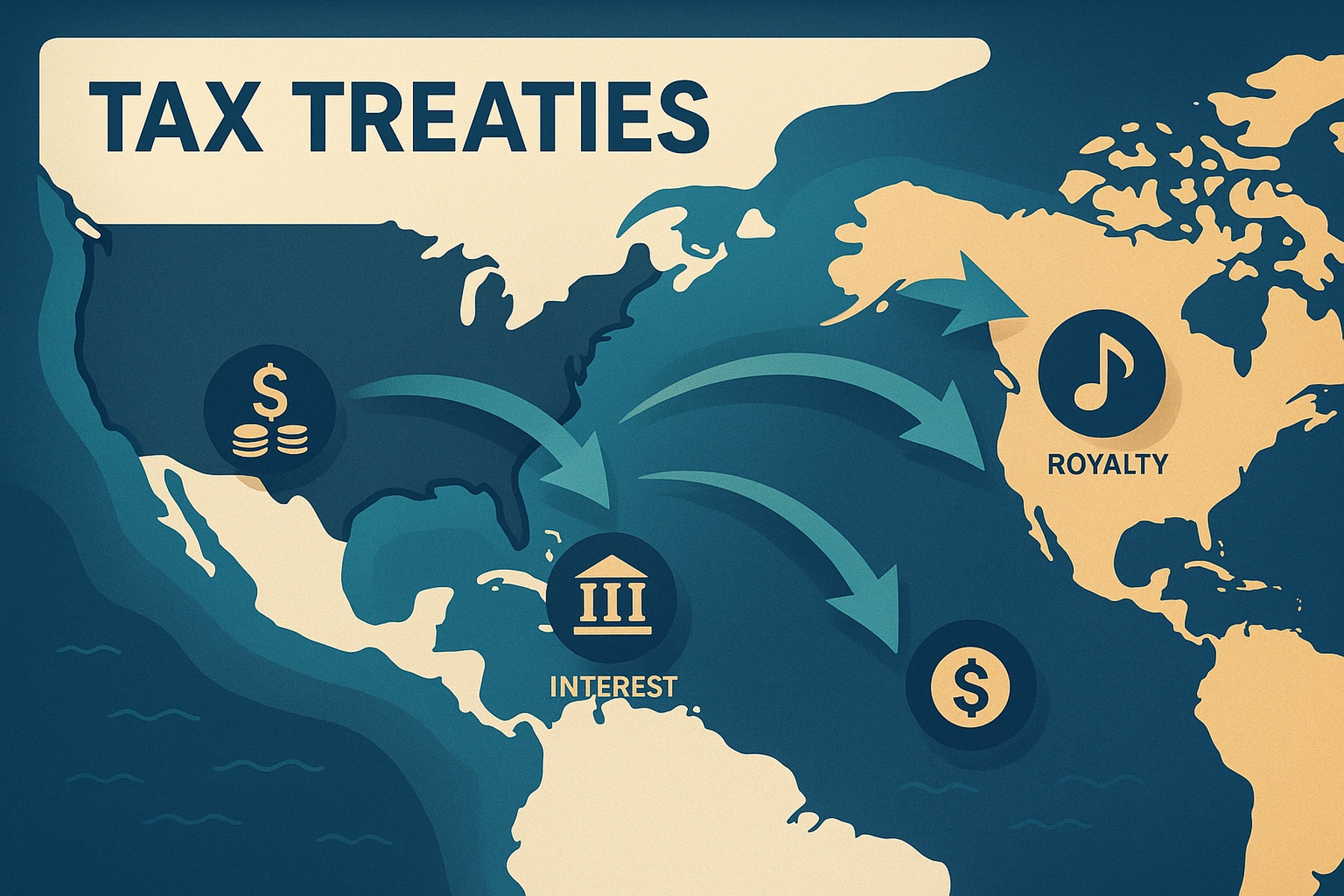
Tax treaties are agreements between the U.S. and many countries that coordinate taxing rights and prevent the same income from being taxed twice. Common benefits include:
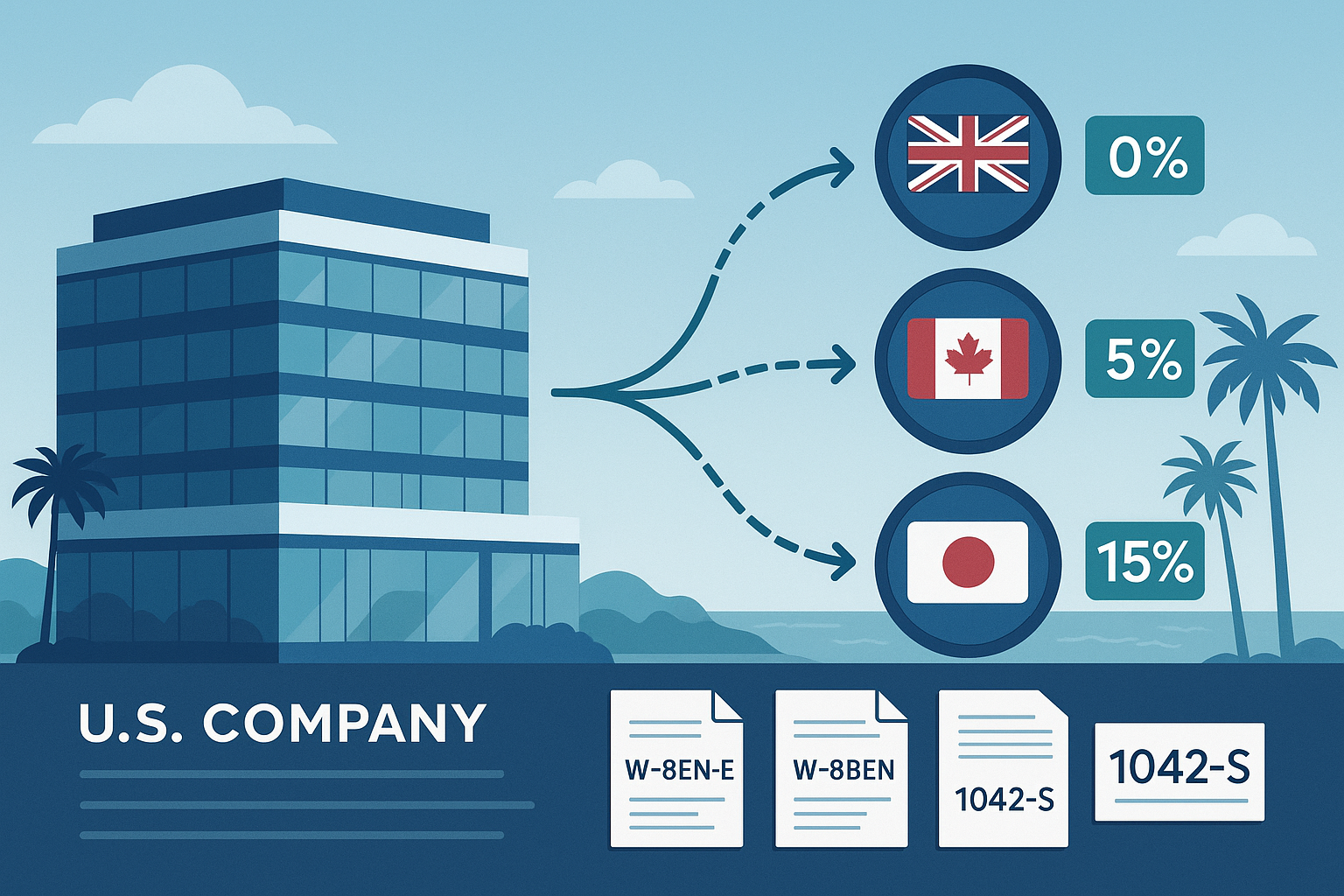
- Reduced withholding on dividends, interest, and royalties – often lower than the default 30%.
- Tie‑breaker residency rules to determine where you’re taxed as a resident when two countries claim you.
- Business profits taxed only where there’s a permanent establishment (PE) – essential for San Diego companies selling into treaty countries.
- Relief from double taxation – typically via the Foreign Tax Credit (FTC) or an exemption method in the other country.
Who Should Pay Attention
- U.S. expats working in treaty countries.
- Foreign-owned U.S. companies.
- San Diego and California investors receiving cross-border dividends or royalties.
- Remote workers splitting time between California and a treaty country.
Key Forms & Compliance
- To claim a treaty reduction at source, you may need Form W‑8BEN / W‑8BEN‑E (for payees) or Form 8233 (for independent/personal services).
- If you take a treaty position on your U.S. return, you may need to file Form 8833 (Treaty‑Based Return Position Disclosure). Not all positions require it, but many do.
- Totalization agreements (separate from tax treaties) can help avoid double Social Security coverage.
Important: Can U.S. citizens & residents use treaty benefits on a U.S. return?
Short answer: not usually for U.S. tax on the U.S. return, but there are narrow exceptions.
- Saving clause. Most U.S. treaties include a “saving clause” allowing the U.S. to tax its citizens and residents as if the treaty didn’t exist. That means a U.S. citizen or resident generally cannot use a treaty to eliminate U.S. tax on their Form 1040. Relief from double tax typically comes from the Foreign Tax Credit (Form 1116) instead.
- Reduced U.S. withholding. Treaty‑reduced U.S. withholding rates (claimed with W‑8BEN/W‑8BEN‑E or Form 8233) are designed for foreign persons. U.S. citizens and residents usually provide Form W‑9 and do not get treaty‑reduced U.S. withholding. However, they may claim treaty benefits in the foreign country to reduce foreign withholding and then use the Foreign Tax Credit on the U.S. return.
- Dual‑resident/tie‑breaker cases. A resident alien who is also treated as a resident of a treaty country may invoke the treaty tie‑breaker to be treated as a nonresident of the U.S. for that year. This is a specialized position that generally requires Form 8833 and careful planning.
- Limited carve-outs. Some treaties carve out specific items (e.g., student/trainee, teacher, government service, or social security provisions) where U.S. residents may still claim a benefit. Application varies by treaty.
- State of California. Treaties do not cover state income tax. California generally does not recognize federal treaty exemptions, so you may still owe California tax even when a treaty helps at the federal or foreign level.
Local Tip for San Diego/Carlsbad
With strong ties to Mexico and the Pacific Rim, our clients often benefit from treaty‑reduced withholding on cross‑border payments and from PE planning that keeps overseas activity from creating unexpected foreign tax filings.
Get it Right
Treaties provide relief, but only when your documentation, residency analysis, and credit calculations are tight. We review your income streams, foreign tax payments, and filing obligations so you can use treaty relief confidently and avoid IRS and foreign‑tax pitfalls.
Contact us for a consultation.
Share this post :

Categories